Why Calm Doesn’t Wait for “A Better Week” — It’s Something You Create
The real reason small businesses stay overwhelmed — and what actually changes that.

There’s a familiar rhythm that plays out every January in businesses across Aotearoa. You come back from the holidays with clearer skin, lighter shoulders and that perennial New Year thought: this is the year I’ll finally get organised. You punch a new to-do list into your notes app. You bookmark a productivity article. You even buy another planner you’re pretty sure you’ll use this time.
And then something happens. A customer replies, a message pings, a job needs quoting, a staff question pops up, a payment is late. Whatever does the job, the calm slips away and suddenly your January starts to feel exactly like every other month: too full, too unpredictable and somehow, still unorganised.
Here’s the truth no one usually says out loud: things don’t get calm on their own. Calm is created. And it’s created not by waiting for a better week, but by building systems that take the load off you.
Before we go further, it’s worth acknowledging how vital small business is to our economy. Small businesses make up nearly all of New Zealand’s business community —MBIE advises around 97 % of all firms — and they contribute to a significant portion of employment and economic activity. That’s a lot of people carrying a lot of responsibility, often without the support structures that larger organisations take for granted.
But despite their importance, productivity for many Kiwi small businesses still lags. Data shows New Zealand small business labour productivity — the amount of output produced per hour worked — has dropped back to the lower end of its pre-pandemic range, signalling that many are working harder without necessarily getting more done.
That’s not because business owners aren’t trying. It’s because we assume more effort or better intentions will fix what is really a structural issue.
Why Waiting for Calm Is a Trap
There’s a pattern here that almost every business owner recognises, even if they don’t articulate it. You put something off because business is busy. But business is always busy. There is no pause button. Busy is not a temporary state — it’s the normal state.
And yet, so many of us frame organisation as something that happens after the busy phase ends. This mindset — waiting for a lull — quietly guarantees that nothing ever really changes. A week that’s slow enough to overhaul your admin rarely arrives, and even if it did, by the time you’re ready to focus on systems, something else urgent fills the space.
If calm only arrives when business gets quieter, you will never feel organised.
Instead, calm must be built into the way the business works. It must be embedded in everyday patterns, not tacked on as an extra task to “do later.”
How Technology and Structure Lift Productivity
You don’t have to take my word for this; there’s evidence that adopting digital tools changes the productivity equation. Government and industry research highlights a clear potential for growth through digitalisation. A recent Techweek report pointed to a substantial opportunity for New Zealand small businesses: if adoption of cloud-based business tools increased meaningfully, it could add an estimated $8.6 billion to the nation’s GDP through improved productivity.
And it’s not a vanity number. Digital tools — like systems that handle enquiries, follow-ups, bookings and workflows — remove repetitive, manual work from your day. Instead of remembering which client needed what, or diving in and out of emails, technology can consistently do the basics — so you can focus on the craft, the customer and the growth.
There’s corroborating insight from productivity data showing that businesses with greater digital demand and adoption tend to outperform peers who delay digital upgrades. These aren’t abstract tech advantages — they’re real differences in how much work gets done with the same time and effort.
The Mental Load Is the Real Problem
Here’s a point that often gets overlooked: the thing that makes business feel chaotic isn’t always the amount of work. It’s how many different places the work lives.
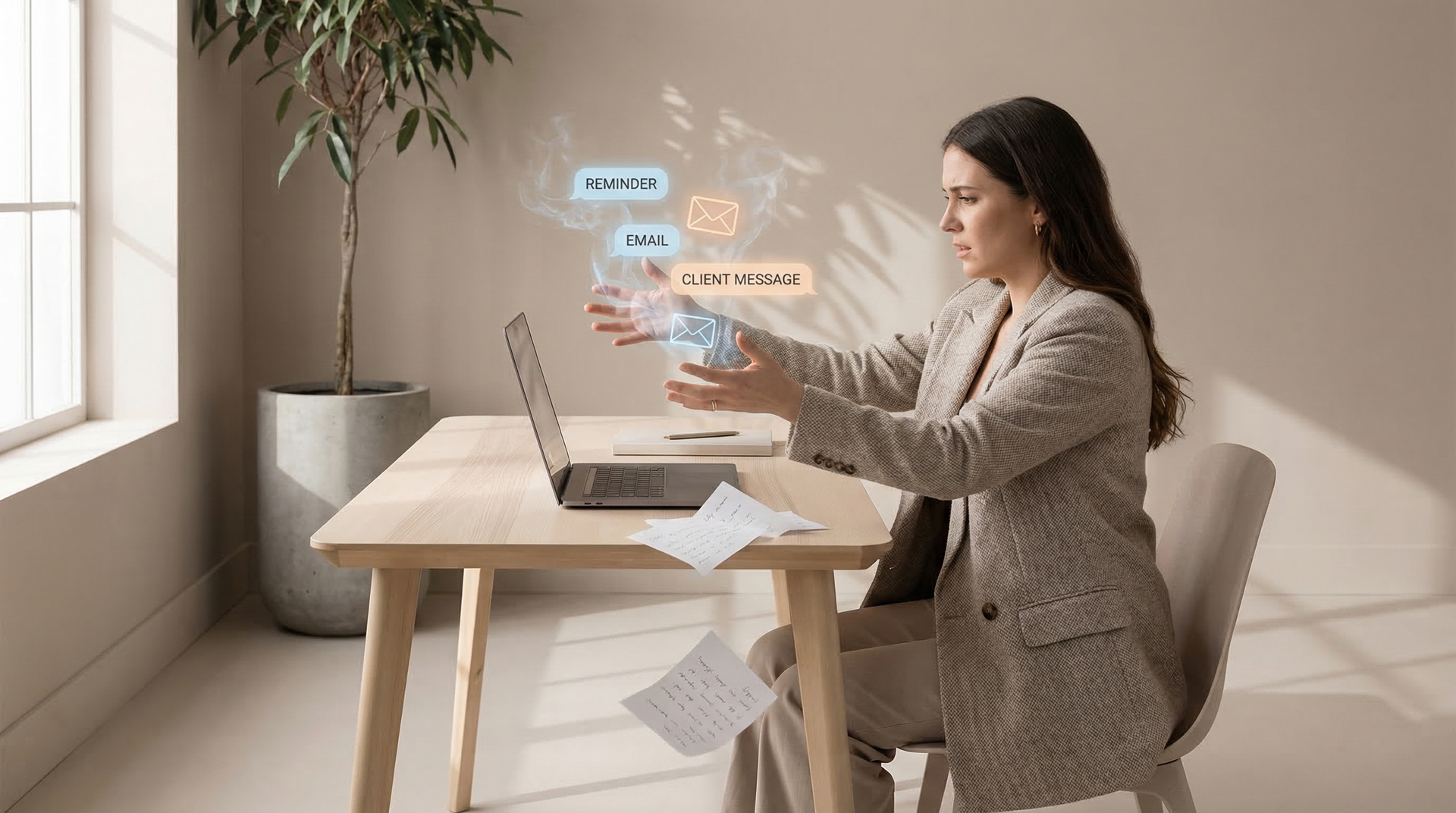
When you have to remember to check email, then messages, then voicemail, then a calendar, then a spreadsheet, then more emails — you’re not just doing tasks, you’re holding them in mind. That constant juggling is exhausting, it steals focus, and it silently diminishes productivity.
And because you’re good at what you do, you usually catch enough things not to fall flat on your face. That makes it look like the system (you) is working. But what’s really happening is you’re compensating for a system that isn’t actually a system at all.
How Real Calm Changes the Game
Calm in business doesn’t feel dramatic. It doesn’t sparkle. It feels subtle first: you finish a day and your mind isn’t buzzing with unanswered follow-ups. You wake up and don’t immediately think “what’s falling through this morning?” You know where your enquiries are, what’s next on your schedule, and who needs what — without having to carry all that yourself.
That quiet relief is the payoff of structure working in the background. Structure that works so reliably you barely notice it until you realise — one day — that you haven’t been burnt out for weeks.
That’s what meaningful organisation looks like. Not chaos magically fading. Not another week where you hope to get to it. But a business that’s engineered to keep itself on track.
Where Structure Meets Everyday Business
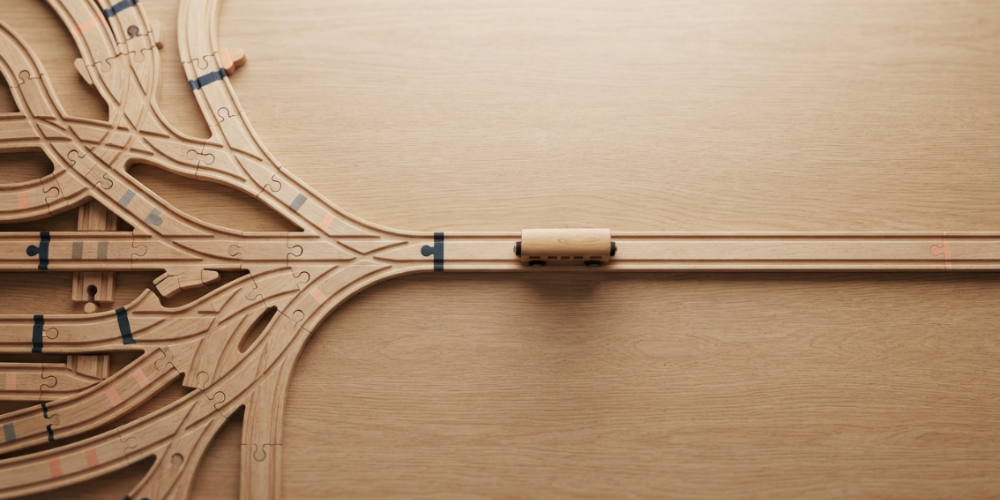
When I talk about an “engine,” I’m not talking about metaphors or fanciful software promises. I mean a business that runs with intentional patterns and systems that handle repetitive work consistently — especially on the days you’re too busy to think about it.
Enquiries get acknowledged right away. Bookings don’t require manual back-and-forth. Follow-ups happen without you remembering them. Payment reminders are automatic. Communication is consolidated so nothing slips between the cracks.
That’s not magic. It’s structure. And when structure becomes the default way of working, calm follows simply because you’re no longer carrying the load of remembering everything.